


Tips When Starting a Commercial Solar Project
Solar power is a key factor in driving renewable energy solutions and reducing carbon emissions. Private businesses are increasingly implementing solar energy arrays and battery energy storage systems (BESS) to generate cost-effective renewable energy. While their decision to take on a commercial solar project can be relatively straightforward, other commercial entities have additional challenges. Special districts, for instance, must meet strict budgetary and operational requirements, limitations that influence solar project development planning and strategies.
This guide will cover insights on starting a commercial solar project for special districts, including how to comply with standard regulations and strategically plan for long-term energy goals.
How Special Districts Benefit From Commercial Solar
Special districts such as sanitation facilities, towns, and transit authorities can benefit significantly from commercial solar solutions. Here are some of the biggest benefits of developing a solar project for a special district.
Lower Electricity Costs
Solar energy systems allow special districts to generate their own electricity to save money on utility bills. Other forms of electrical energy can have unpredictable prices that make it difficult to budget effectively. Once the solar array is installed, you’ll have low, fixed energy costs that are not subject to market fluctuations.
Environmental Sustainability
As a renewable energy source, solar power reduces greenhouse gas emissions and reliance on fossil fuels. Many special districts are part of towns or states that have established sustainability goals. Transitioning to solar power can help meet these goals. Solar power can virtually eliminate a special district’s reliance on fossil fuel for its energy needs when combined with battery-storage systems.
Starting a Commercial Solar Project
Partner With a Reputable Solar Project Developer
Choosing the right developer is one of the most important elements when starting a solar energy project. An experienced developer can significantly simplify the process and guide you through common challenges. Here is what you should look for in a reputable solar project developer.
Experience
Developing a solar project can be more complex for a special district than for a typical commercial client, given factors such as inflexible budget cycles that dictate timelines, regulatory oversight, and public accountability measures. Look for an experienced solar developer who understands the parameters you’re working with and can help you comply with them.
Credentials
Special districts are generally limited to working with credentialed solar developers. The requirements will vary by state; some states require solar developers to obtain a solar contractor license, while in others, solar developers fall under a more general electrical contractor’s license. You’ll need to work with a solar developer who meets your state’s qualifications to meet your compliance obligations.
Understand What an RFP Is and Needs
Some states require special districts to issue a request for proposal (RFP) before they perform any public works projects. This is a formal process that involves soliciting bids from qualified contractors. An RFP aims to ensure fairness and transparency in the bidding process, and eliminate favoritism and waste in public projects and capital expenditures.
While RFPs are typical in many states, there are some exceptions. For instance, under California Government Code Section 4217, special districts don’t have to engage in a competitive bidding process by issuing an RFP if the project meets the following conditions:
- It’s an energy-service contract that’s in the public’s best interest.
- The governing body determined it was in the public’s best interest at a regularly scheduled hearing and provided at least two weeks’ notice before the hearing.
- The cost to the public agency of the project will be less than the cost of the energy the agency would consume without the project.
- The agency is able to recoup any lease discounts it offers a solar developer through reduced energy costs.
- State agency heads can make these decisions without a public hearing.
Under these provisions, special districts have the flexibility to work directly with private solar developers on projects where the public benefit is clear. This allows for a streamlined approval process and beneficial financing options.
Use Smart Solar Financing Options
Special districts have several options available for paying for solar power for municipalities. Here are some of the most common methods.
Power Purchase Agreement
A solar power purchase agreement (PPA) allows your special district to install a solar energy array without any upfront cost. You provide the space for the solar installation, and the solar developer installs the solar panels and maintains the system for the length of your contract, which often lasts 20 to 25 years. In return, you pay a reduced, fixed rate for the power you draw from the system.
This financing option allows you to immediately benefit from lower power rates and renewable energy without a major upfront investment. As long as you have space suitable for solar panel installation, you can take advantage of PPA financing. Typical installation occurs on the ground, on roof space, or canopies over parking lots.
The Central Contra Costa Sanitary District (Central San) was able to implement its solar project by working with REC Solar and utilizing PPA financing. REC Solar designed, constructed, and installed a 2.2 MW ground installation near the wastewater treatment plant on unused buffer property. REC Solar will continue to maintain and operate the solar array as part of the PPA agreement. Central San will save an estimated $6 million in net energy bills over the contract’s life. The company was also able to meet its sustainability goals by eliminating 1,865 metric tons of carbon dioxide emissions annually.
Commercial solar installations and projects provide numerous long-term benefits, including cost-savings, environmental sustainability, and a decreased reliance on the power grid. However, they can also involve complex logistical, administrative, and regulatory challenges.
The simplest way to navigate these challenges is by working with an experienced solar energy developer. They can offer you assistance in planning, financing, and completing your project.
Even if you can pay for a solar development project upfront, . Entering into a PPA eliminates this hassle and allows you to focus on your primary operational activities while benefiting from renewable energy solutions.
Taking the Next Steps in Installing Commercial Solar
After you find a solar energy developer and decide on a financing option, you’ll need to finish several other steps. However, before starting a commercial solar project, you’ll need to obtain all necessary permits, such as building permits, electrical permits, and any essential solar-specific permits. An experienced partner such as REC Solar can help with all of this.
REC Solar has decades of experience in solar energy project installation and often works with special districts to meet their specific needs.
REC Solar announces new Panel Slugging services for customers
In response to a growing number of businesses looking to expand their positive impact on the environment, REC Solar is excited to announce the addition of Panel Slugging to its growing portfolio of solutions and services.
Drawing inspiration from the wildly popular “skin slugging” skincare technique – which involves applying a thick layer of petroleum jelly to your face to lock in moisture – REC Solar’s Panel Slugging services will include the delivery of thousands of slugs (and, in select California locations, banana slugs) for positioning on your ground-mount solar arrays.
The slugs’ sticky, polymer-rich mucus will clean dirty panels and provide a protective layer that prevents scratches from environmental factors (like dust). As an extra benefit, the slugs will help manage vegetation by eating grass and weeds that grow beneath the solar panels.
It’s the perfect solution for customers who need extra worry-free help maintaining the efficiency and upkeep of their solar arrays after installation.
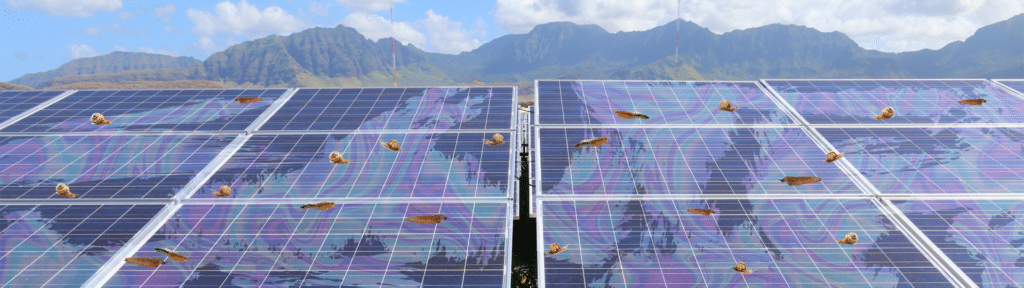
Okay, you got us – there’s no such thing as Panel Slugging. But wouldn’t you like to take advantage of a real solution that provides expert operations of your solar assets?
While we may not offer Panel Slugging services, REC Solar is here to finance your next solar project as a power purchase agreement (PPA).
With a commercial solar PPA, you pay for the energy your solar system produces so leave the operations and maintenance (and any new cleaning trends, fads and technologies) to us. You provide the site, and our dedicated team of solar experts — humans, not slugs – will handle the design, build, operations, maintenance and system optimization so your team can focus on more pressing matters (like skin slugging perhaps?).
Visit our Financing page to learn more and connect with one of our team members.