


Benefits of Solar for Warehousing & Cold Storage
Large facilities, such as warehouses and cold storage facilities, typically run energy-intensive equipment that requires round-the-clock operations. And those high energy costs can wreak havoc on budgets.
But with warehouses and cold storage facilities also having expansive, flat roofing surfaces, that makes them ideal candidates for incorporating solar panels and energy storage into their energy mix.
Solar + storage is a strategic solution for warehouses and cold storage facilities that addresses increasingly high energy costs, regulatory pressure at the local, state, and federal levels, and sustainability demands from the public. Plus, solar benefits for warehouses include reducing expenses and increasing operational efficiency.
Why Warehouses Need to Start Thinking About Energy Costs
America’s investment in solar power and other renewable energy sources is rising dramatically. The market reached almost $93 billion in 2023. On the other hand, electricity prices in California have doubled in the past decade. These skyrocketing costs have increased the cost of doing business for warehouses and cold storage.
Companies that don’t take action will face growing financial impacts as costs continue to soar. They may also find themselves subject to regulatory penalties for noncompliance with mandates. Energy-efficient practices such as going solar can help reduce costs, promote regulatory compliance, and drive more efficient operations.
The Impact of Rising Utility Rates
California not only currently has one of the highest utility rates in the country (with little signs this squeeze will let up in the future), but its state regulators also raised utility rates four times in 2024, driving prices even higher. For energy-intensive industries such as warehousing, utilities can end up being a major driver of budget overruns.
Solar power and energy storage can transform the heat-absorbing capacity of warehouse roofs into a source of energy creation. Operators can use this renewable energy to power lighting, air conditioning, heating and cooling, refrigeration, and other machinery.
The Push for Sustainability in Warehousing
The growing demand for environmentally sustainable practices is another compelling reason to incorporate solar power into your energy mix. Between state regulations, consumer expectations and corporate social responsibility goals, switching to renewable energy sources is a high priority for many companies for reasons that go beyond its cost-efficiency.
Many major corporations are already making the switch. Walmart has a goal of running on 100% renewable energy by 2035. Amazon plans to reach net-carbon zero emissions by 2040. These and other leading enterprises are heavily investing in solar power to reach their sustainability initiatives.
What Are the Benefits of Solar-Powered Warehouses?
Solar and energy storage solutions provide economic, operational, and environmental benefits, particularly with facilities that have the following conditions:
- Large rooftops or available land
- High energy bills
- Perishable food, pharmaceutical, or biotech storage
Reduced Operating Costs
By integrating solar and storage into your energy mix, you can save on overall energy costs by evening out your energy load and avoiding peak usage penalties.
A commercial solar + storage system stores low-cost energy and delivers it during peak periods of higher electricity rates, helping your organization save on overall energy costs and avoid peak usage penalties. And when financed as a power purchase agreement (PPA), you can get the budget certainty your organization needs, helping to predict energy costs for years to come.
Under a PPA, a solar developer will install solar panels on your roof or land, without you having to purchase them upfront. As part of the agreement, you’ll purchase the solar energy they generate at a discounted rate that helps to serve as a long-term hedge against rising utility prices.
Enhanced Sustainability
In addition to meeting your own sustainability goals and commitments, switching to solar power and energy storage allows you to help others fulfill their sustainability initiatives. As the economy becomes more globally connected, each node in the value chain contributes to the success or failure of the others.
To illustrate the environmental impacts throughout the supply chain, businesses use scope emissions as part of sustainability strategies. Scope emissions fall into three categories:
- Scope 1: These are your direct emissions that occur as part of your on-site operations.
- Scope 2: These are the indirect emissions that occur when you purchase electricity for your operations.
- Scope 3: These are the emissions that occur throughout your value chain, such as transportation, distribution, and storage.
On top of generating your own scope 1 and 2 emissions, warehouse facilities are a source of scope 3 emissions for the organizations they provide services for. By improving your scope 1 and 2 emissions with solar energy (and also incorporating solar into fleet electrification plans), you’ll also help to improve scope 3 emissions throughout the value chain.
More organizations are considering environmental, sustainability, and governance (ESG) goals to demonstrate their commitment to the environment and to transparency in business operations. A strong ESG position can help you appeal to investors, attract and retain top-quality talent, and improve employee motivation. Incorporating commercial solar panels and energy storage can play an important role in crafting an effective ESG position.
Improved Energy Independence
Commercial onsite solar energy and energy storage reduces your reliance on the grid and gives you more control over your energy. Some states have started implementing rolling power outages to address electricity shortfalls. For warehouses with critical operations, this benefit is particularly important.
What Solar Programs Are Available for Warehousing & Cold Storage Facilities?
Because decreasing carbon emissions and encouraging renewable energy are societal goods, there are several specific programs and initiatives you can take advantage of that are designed to encourage solar adoption in warehousing.
- WAIRE Program: The Warehouse Actions and Investments to Reduce Emissions requires that warehouses over 100,000 square feet accumulate WAIRE points via emission-reduction measures. It offers incentives for projects such as solar installations that power warehouse operations and charging zero-emission vehicles.
- Net Metering Benefits: Net metering programs allow you to sell your excess solar energy for cold storage back to the grid, which can further offset your energy costs. However, in California, net metering has changed due to NEM3, which reduces the rates for net metering credits. Because of this, you’ll likely generate the most savings by storing your excess solar power through battery energy storage systems. This allows you to bank excess energy generated by your solar panels so you can use it later.
What Businesses Can Expect From Solar Power
If you choose to install solar panels on your warehouse or cold-storage facility with the right developer, you can expect a minimally disruptive installation process and long-term benefits.
- Streamlined process: The right solar developer will understand your business operation needs and realize that you can’t shut down your primary business functions to put in a new system. They’ll work with you to minimize disruptions to your daily operations through efficient project management practices and advanced technology that promotes a seamless transition.
- Comprehensive business sustainability plan: Combining your solar energy system with fleet electrification and other energy-efficient upgrades will help you get ahead of regulatory requirements and give you a competitive edge that will future-proof your operations.
- Long-term savings: With an investment in solar panels and battery energy storage systems, you can expect to see long-term savings on your utility bill as well as predictable monthly payments. Depending on the purchasing option you choose, some solar for warehousing benefits may be immediate. If you go with PPA financing, you won’t have any initial upfront costs, and you’ll realize immediate savings on energy expenses.
Install Solar on Your Warehouse With REC Solar
Solar energy for cold storage opens up cost-saving and sustainability opportunities for your facilities. REC Solar has been a trusted partner for warehouses seeking to transition to solar energy for decades. We have extensive experience in designing, financing, owning, operating and maintaining hundreds of solar and storage projects. We empower organizations like yours to reduce reliance on the grid, better control energy usage, and meet environmental goals.
Reach out today to discuss the best options for your cold storage facilities and distribution centers.
Solar: A Smart Investment for Food & Beverage Companies
This article, written by REC Solar Business Development Manager James Presta, appeared in Industry Today on February 28, 2025. Click here to view the article on Industry Today.
The U.S. food and beverage industry accounts for 6% of the country’s total industrial emissions. Food and beverage operations require a lot of energy and can occur across large, distributed facilities that can be daunting to decarbonize. Companies are under increasing pressure to lower their emissions and environmental impact, an effort that must extend to their entire supply chain — sourcing, manufacturing, processing, and distribution – to be the most effective.
Pressure to decarbonize is coming from multiple sources. Industry groups like the Science-Based Targets Initiative (SBTi) are encouraging private sector companies to set and work toward realistic and meaningful climate goals. Major retailers including Walmart, Target, and Amazon now require carbon accounting from the food and beverage brands they offer customers. In recent years, many states have introduced corporate clean energy mandates and standards including California, New York, and Illinois.
In recent years, solar energy has gained momentum as an accessible and affordable source of clean energy, particularly for commercial and industrial sites. Food and beverage companies actively seeking ways to lower their emissions, guard against rising energy costs, and improve their energy security should look to solar as a smart investment to reach their financial and sustainability goals.
Unpacking the value of solar
Energy remains one of the highest expenses for any food and beverage company. Manufacturing and processing facilities are notoriously energy intensive and many operate nearly 24/7 to keep up with demand. With energy prices expected to continue to increase in coming years, food and beverage companies are seeking ways to reduce their reliance on volatile fossil fuel resources in order to lower costs and emissions.
Within facilities, many food and beverage companies have begun upgrading appliances and processes with cleaner, electric alternatives. For instance, natural gas furnaces can be replaced with more efficient electrified options like heat pumps. Companies that rely on vehicle fleets for transportation and distribution may switch to EVs that require on-site charging. These changes serve to reduce a site’s overall carbon footprint but also add new energy loads, which can incur higher utility prices.
An appropriately-sized solar array can deliver clean, low-cost power to a facility to offset new electric loads and support an organization’s broader transition to a cleaner energy future. Since energy costs are a big expense, cost savings also remain one of the biggest motivators for adopting solar in the food and beverage industry. Going solar and entering into an on-site power purchase agreement (PPA) enables a company to extend their investment and guard against future energy price volatility. Many of these agreements allow you to lock in a favorable rate for 20-25 years, providing peace of mind and guaranteed access to clean, affordable energy. PPAs also eliminate many of the upfront costs associated with installing solar, making it possible to adopt clean energy assets without major changes to budgets and investment priorities.
Best practices for deploying solar
No two food and beverage manufacturing sites or companies are the same. Working with a developer who understands the unique features of each facility, the local power grid, regulatory environment, and more is critical when deploying solar. For the food and beverage specifically, developers will need to work around a facility’s existing needs and processes as much as possible to minimize costly disruptions or downtime that may occur as systems are connected and brought online.
The right developer can help identify the appropriate size solar system to support current and future energy needs, they can also help design a system that takes the site’s layout into consideration. Rooftop installations are common for manufacturing and processing facilities due to their size and available roof space but some food and beverage companies may elect to install ground mounted panels if they have space available on their property. Developers may also offer options that boost cost savings and support other energy efficiency initiatives, like bundled plans that offer both solar and EV charging infrastructure. Pairing fleet electrification efforts with solar is a lucrative investment that can provide food and beverage manufacturers with a comprehensive, future-proof solution to meet zero emissions goals and offset the cost of EV charging.
Going beyond solar, food and beverage facilities that prioritize resiliency and energy independence may also want to install on-site energy storage. For companies operating across several regions, state energy policies– like California’s net metering and demand charges, for instance – may make solar plus storage a more lucrative investment.. Storage can also be a smart investment in areas prone to extreme weather and grid outages. A properly-sized energy storage system provides backup power that can keep essential operations running when the grid goes down. Pairing solar with storage can also support lower energy costs. When a facility is able to draw from stored solar energy instead of grid power during peak periods, it can avoid higher prices.
It’s also possible to secure financing or a PPA via a solar developer. Some also offer ongoing operations and maintenance support for the solar system, energy storage, EV charging, and other assets. This can be a critical value add for food and beverage companies who are focused on efficiency across all their operations but do not employ in-house energy or sustainability experts.
Looking ahead at a cleaner future
The Solar Energy Industries Association (SEIA) reports that the cost to install solar has dropped by nearly 40% over the last decade. In recent years, federal tax credits and incentives around domestic solar production and deployment have expanded the market for these technologies into new states and regions.
Solar prices are trending in the right direction and pressure to lower costs and emissions across critical industries like food and beverage manufacturing is not a trend that will fade in coming years. Now is the time for companies to get serious about future-proofing their facilities with clean energy technologies.
It’s clear that going solar makes smart business and environmental sense – food and beverage companies that adopt solar are not only investing in a cleaner, more affordable future for themselves, they are demonstrating a path to long-term sustainability for customers, partners, and industry peers.
Everything Warehouses Need To Know About the WAIRE Program
The Warehouse Actions and Investments to Reduce Emissions (WAIRE) Program was adopted in May 2021. The South Coast Air Quality Management District (SCAQMD) passed this program, also called Rule 2305, to incentivize warehouse operators to implement renewable energy sources such as solar energy, battery energy storage systems, and electric vehicle charging stations.
This rule promotes California’s environmental sustainability goals by reducing carbon emissions and helping reverse climate change. Specifically, WAIRE addresses warehouses as sources of air pollution and aims to reduce it, particularly in communities where they’re located.
WAIRE is being implemented in phases and warehouse operators must understand the guidelines to avoid these penalties and develop more environmentally sustainable practices.
What Is the WAIRE Program and Rule 2305?
Warehouses — and the heavy-duty trucks they rely on — are a significant source of air-polluting emissions in the South Coast Air Basin due to their role in supply chain logistics. To mitigate these emissions, the SCAQMD enacted Rule 2305. As part of AQMD Rule 2305, warehouse operators must earn points for various emission-reduction activities to fulfill their WAIRE Points Compliance Obligation (WPCO). The number of points a warehouse must earn depends on the number of trucks that visit it annually.
How California Warehouses Are Affected by WAIRE
Rule 2305 requires California warehouses to track and submit a report of their emission-reduction strategies annually. The WAIRE Program was implemented in three stages, with the last going into effect in 2024. If your site doesn’t earn enough WAIRE points to offset your WPCO, you must pay mitigation fees.
Many warehouses face challenges in WAIRE compliance. The initial costs of compliance actions can be significant, and transitioning to clean energy options can temporarily interrupt business operations, which can add to the expense.
Fortunately, operators have flexibility in how they earn WAIRE points. You can choose options that make the most sense or are part of your sustainability strategy. In the long term, the WAIRE Program is part of California’s goal to achieve net-zero emissions by 2045.
How Does the WAIRE Program Work?
Warehouses that are over 100,000 square feet earn points through a menu-based system. You can earn points using one or more of the following three methods:
- Completing any combination of activities in the WAIRE menu
- Completing a custom, approved, site-specific WAIRE plan
- Paying a mitigation fee
Each year, you must file an Annual WAIRE Report (AWR) outlining your actual truck trips, earned points, and metrics for your completed actions. Your reports must be submitted via the WAIRE Program online portal (POP). Your records are subject to audits and verification by the SCAQMD and must be retained for seven years.
Earning WAIRE Points
The WAIRE menu includes activities such as installing clean energy systems, adopting zero-emission vehicles, or improving your operational efficiency. You can accumulate points for buying or being visited by zero or near-zero-emission vehicles. Buying, leasing, or renting low or no-emissions vehicles counts toward this option, as does every visit to your warehouse from one. This is a good opportunity to earn points from third-party fleets.
In addition to promoting activities that contribute to renewable energy, the WAIRE Program awards points for activities that reduce air pollution, particularly in the communities where they’re located. One such activity is upgrading the HVAC systems in communities that are located near hospitals or schools. You can earn points for installing or upgrading to a MERV 16 or better high-efficiency air filtration system as well as regularly replacing the filters.
Developing a proactive plan for compliance will help you avoid fees and penalties and save money. You can bank WAIRE points to carry over, so if you’re implementing a high-point initiative this year, you may be able to use some of them next year.
Meeting WAIRE Goals With Solar Energy
Installing solar energy is one of the most cost-effective and efficient methods of reducing emissions and meeting WAIRE goals. Commercial solar installations can also be used to power electric vehicle charging stations, which is another avenue for earning WAIRE points and powering electric yard trucks.
There are two primary methods of earning WAIRE points through commercial solar energy: solar panel installation and solar energy usage. This allows you to keep earning points beyond your initial installation.
Warehouses typically have flat roofs, which are ideal for installing rooftop solar panels. You can also install solar panels as part of carports or on other available land. Commercial solar energy systems earn WAIRE points based on the system’s kilowatt capacity. Larger systems earn more points, allowing you to scale up if you have ample space.
Solar can be a great investment if you finance your project with a solar power purchase agreement (PPA). With commercial solar PPA financing, you have no upfront costs. The solar developer constructs, owns, maintains, and operates the solar project on your property. You’ll immediately see the benefits of reduced energy prices, lower emissions, and WAIRE points without an expensive capital outlay. And when combined with energy storage, you’ll also be able to control your energy usage and eliminate peak demand costs. This is particularly important for cold storage warehouses.
Because you earn points based on the amount of energy your system generates, using PPA financing allows you to accumulate points for the excess energy your system generates. You can use this passive generation of WAIRE points to meet your WPCO or bank excess points for future years.
Although you can’t earn WAIRE points for existing systems — though you can for using these systems — you can earn them for adding new capacity. If your solar installation exceeds the standard WAIRE menu option, you can propose a custom plan to earn additional points.
A commercial solar energy installation can be the foundation of your sustainability and compliance efforts. It allows you to create a strategic renewable energy initiative that will deliver reliable, affordable energy and help you reduce emissions — all at minimal cost to your organization.
Become WAIRE Compliant
REC Solar is experienced in helping southern California businesses navigate WAIRE requirements, so you can maximize your WAIRE points while minimizing your expenses — both upfront and ongoing. Sustainability is increasingly important for businesses and their customers. Switching to solar energy can help you comply with regulations and give you a competitive advantage in the marketplace.
Which Is Better: Commercial Solar PPAs or Cash?
It’s a scenario that happens all too often: Your company has seen an increase in energy costs in recent years. Whether from energy utility rate increases or higher energy demand (or both!), it’s clear that the high energy costs significantly drain your company’s budget.
You know incorporating commercial solar energy into your energy mix can lower those costs by reducing the amount you pay per kilowatt-hour – and that makes a solar + storage system a logical win-win for your company’s budget, operations and sustainability goals.
But convincing leadership of the sustainability and cost-saving benefits of a solar + storage system isn’t your biggest hurdle. You need to know the best way to finance your project.
As companies nationwide adopt solar and energy storage at record levels, they often find themselves torn between two of the most common financing options: cash and power purchase agreements (PPA). And on the surface, it’s not always the easiest to determine which is best for your business.
In this blog, we’ll explore commercial solar PPAs and self-owning your own solar assets to help your business decide which is right for your business and budget.
What Is a Commercial Solar PPA?
Commercial solar PPAs are long-term agreements (typically 20-25 years) between a business and a solar developer. In recent years, it has gained popularity and emerged as the go-to financing option for organizations going solar.
How Does a Commercial Solar PPA Work?
With solar PPAs, a solar developer builds, owns, maintains and operates a solar energy system on your property.
The process is pretty straightforward:
- Your business provides the site (rooftop, parking lot or open land) for a solar installation.
- The solar developer handles the rest, including construction, permitting, installation, long-term maintenance and operations over the life of your PPA.
- Your organization purchases the electricity produced at a predetermined rate measured in kilowatt-hours, just like your current utility bill.
Once the PPA term is up, businesses can typically purchase the system at a reduced price, begin a new PPA or have the developer remove the system.
What Are the Benefits of Solar PPA Financing?
Solar PPAs offer numerous advantages, including:
- Minimal or no upfront spending: A key advantage of solar PPA financing is its zero (or low) upfront costs. This allows companies to move solar projects off their balance sheet, which can help preserve significant capital for more pressing business priorities.
- Immediate savings and long-term protection against rising electric costs: Because a solar PPA locks your business into a long-term electricity purchasing contract, your rate won’t be exposed to fluctuating costs. With most companies feeling the sting of rising electric costs in recent years, the ability to lock in today’s prices provides savings and price predictability for as long as 20 years.
- No maintenance required: When financing your company’s project with a PPA, you can shift O&M risks to your solar developer. That means your company won’t be responsible for operations, maintenance or monitoring. And since the developer owns the system, they’re accountable for rising insurance premiums, protecting against outdated technology, and more.
- Less risks: Under a PPA, the solar developer assumes all liability risks for the system, including shouldering the burden of rising insurance premiums. That means your team can have confidence knowing that it has ample insurance to protect its solar assets.
The Future of Commercial Solar PPAs
The growth of the solar PPA market has grown tremendously in recent years and continues to be widespread across America and abroad. In 2023 alone, corporations announced 46 gigawatts of PPAs, a record high for the calendar year. In the U.S., PPA investments have grown more than 5x in the past 10 years.
There’s no reason to believe these trends will slow down any time soon. If anything, sustainability will become more critical as we move into the future.
Paying for solar with cash
Many companies still choose to pay cash for their projects with plans to self-own and operate their solar assets over the long term, but that can also come with caveats to consider:
- High upfront costs: Paying the full price upfront for your solar project can be a substantial financial investment for some businesses that may not have the liquidity to invest in solar outright. And for companies with the cash to purchase their project outright, it may be wise to consider conserving that capital for other, more pressing projects and priorities.
- Operations and Maintenance: Companies that choose to pay cash for their systems have to shoulder the burden of dealing with permitting, monitoring, maintenance, operations and upkeep. Replacing a single component can quickly escalate into reconfiguring a portion of their PV system, which can get complex without the proper expertise and access to equipment. Without the ability to outsource these repairs to a dedicated and experienced solar asset manager, their maintenance team is faced with optimizing the solar project as issues arise.
- Rising insurance premiums: If your organization chooses to self-operate and maintain its solar and storage systems, high premiums due to inflation and increasing hazard areas (i.e., floods, windstorms, hail or wildfires) may significantly impact your ability to secure affordable property insurance each year.
- Supply chain delays: When attempting to order parts on your own, it’s not uncommon for lead times on equipment to exceed a year, leading to significant downtime when waiting for delivery. Without a solar developer with quick access to equipment, it could be hard to navigate supply chain issues on behalf of your organization.
What Other Solar Energy Financing Options Are Available?
On the surface, a commercial solar PPA and lease may seem similar. There are no upfront costs. The solar developer is responsible for your system’s design, construction, installation and permitting. The developer also handles maintenance, ownership, and operations.
However, a closer look at the two financing options shows the difference is in the details.
Solar Leasing
With solar leasing, you pay a fixed monthly fee for using the solar panels installed on your property, regardless of your energy usage for any given month. That differs from a solar PPA, which is directly tied to your system’s production, giving you more control over the monthly amount you pay.
How Do I Know if a Solar PPA is Right for my Organization?
If you’re still unsure whether a PPA or cash is right for your company, working through the following points can help you decide.
- Are PPAs allowed in your state? As of 2025, 28 states offer PPAs, plus Washington, D.C. (If your state doesn’t allow power-purchasing agreements, solar leasing may be a comparable financing choice.)
- Compare energy prices before and after a potential PPA. Next, look at the current price you pay per kilowatt-hour and compare it to quotes from energy companies. Your post-PPA price can be meaningfully lower. You can add those savings for each kilowatt-hour your company uses over the agreement’s lifespan. This will help you estimate your total savings from a PPA.
- Consider the costs, risks, and benefits of purchasing a solar energy system. Finally, solar ownership should be compared to a PPA. Both options should save your company money in the long run, but ownership carries a high upfront cost and potential ongoing charges. You can run some calculations to see which choice is right for your budget.
Invest in the Future of On-site Commercial Solar Energy with REC Solar
Choosing a PPA partner with a proven track record of helping businesses like yours succeed is essential. REC Solar has over 25 years of experience supporting companies nationwide as they pursue their solar goals. We’re here to do the same for you.
Benefits of Solar for Water Treatment Plants & Sanitation Facilities
Water treatment plants have become increasingly important to communities throughout the United States.
However, water treatment and sanitation plants consume a significant amount of energy — about 4% of the U.S.’s total supply. This makes solar energy an exciting opportunity in this industry. It provides an efficient, sustainable power source to keep this critical infrastructure operating at a lower cost.
This article explores the benefits of solar for water treatment plants in the context of these challenges. Read on to learn how municipalities can leverage this technology to prepare for the future while cutting operational costs.
What Are Wastewater Plants Facing?
Transitioning to a solar-powered wastewater treatment facility can prepare utilities to address three significant challenges they face today.
Rising Energy Costs
A water treatment plant requires energy to convert dirty water into a reusable resource. Between aeration, sludge treatment, pumping systems, and odor control processes, energy accounts for about 30% of these facilities’ ongoing costs.
This has become problematic as energy prices continue to rise. For example, electricity rates for California businesses have risen nearly twice as fast as the annual inflation rate over the past decade. It’s a trend the California Public Utilities Commission expects to continue for the foreseeable future.
Given their energy-intensive processes, wastewater plants are particularly vulnerable to these price increases. This has made cutting energy costs a top priority for many water treatment facilities nationwide.
Aging Infrastructure
Many U.S. wastewater facilities are also struggling with aging infrastructure. This not only increases operation and maintenance costs but also increases the likelihood of downtime, leaks, and quality control issues. The most recent estimates suggest about 15% of U.S. wastewater treatment facilities have reached or exceeded their design capacity.
How Sanitation Facilities Can Leverage Solar
Solar helps wastewater plants overcome some of the most common challenges they face today. Here’s a look at how plants across the country have integrated solar into their operations.
Integrating Solar Into Wastewater Plants
Adding commercial onsite solar to a water treatment plant typically means installing ground-mounted and rooftop panels. These capture energy from the sun and transform it into a form of power the facility can use.
The installation process requires careful planning. Plants must identify the optimal locations for panels, assess structural integrity, and connect their new solar energy system to the existing utility grid. Most facilities rely on partnerships with solar companies to develop and execute these plans.
It’s also important to consider solar energy storage systems, such as batteries, during the integration phase. These store solar power for later use. Without them, a plant can only leverage the benefits of solar energy when the sun is out.
After installation, a treatment facility can use its new energy source to cut costs and reduce its reliance on the grid. That can sometimes mean using solar to directly power energy-intensive equipment like aerators and pumps.
Smart Financing Options
The next factor to consider is how your plant would pay for its new solar energy system. One option is covering the cost of equipment and installation upfront. But that would require a significant initial investment — money most government-run organizations lack.
That’s why power-purchasing agreements (PPAs) are ideal for a water treatment plant. Popularized through commercial solar energy, these agreements make it possible to benefit from solar with almost no initial investment.
Companies that offer PPAs install solar panels at minimal upfront cost. In exchange, your facility agrees to purchase the energy those panels generate at a set price for a pre-determined number of years. The per-kilowatt-hour cost should still be substantially lower than what you pay for electricity today — saving your facility money while helping it meet goals around clean energy.
The Benefits of Using Solar Energy to Power Your Facility
When it comes to integrating solar, the question isn’t just whether panels would be suitable for your treatment facility — it’s how you can justify the price and focus. If it falls on you to make the case, you can start by highlighting the following three benefits of solar for water treatment plants.
Cost Savings
Solar panels help wastewater facilities save money. They do so by unlocking a new, free source of energy — reducing the amount of power that must be pulled from the utility grid.
Your organization’s savings math will vary based on whether it buys panels outright or enters a PPA. If you buy outright, your initial costs will be high. But your energy bills will drop significantly, recuperating what you paid over time.
If you enter a PPA, your initial costs will be low, but your energy bill will not decrease as much as it would with an outright purchase. Some estimates say solar energy PPAs cut wastewater treatment plant costs between $25,000 and $50,000 annually. That means saving between $500,000 and $1 million throughout the panels’ lifespan — and potentially significantly more.To calculate your facility’s potential savings, consider what it pays today per kilowatt/hour. Then, get a quote on what you’d pay through a solar PPA. Take the difference and multiply it by the amount of energy your facility uses annually. This will give you a dollar figure you can use to make the case for solar at your wastewater plant.
Environmental Impact
Saving money is just one reason to add solar power to your facilities. Wastewater facilities also choose this option to reduce their environmental impact. Some estimates say adding solar to a water treatment center can reduce greenhouse gas emissions anywhere from 13 to 30%.This can do more than help a treatment facility comply with environmental mandates from regulatory agencies. It can also garner goodwill across the community, as the majority of Americans now care about climate change.
Case Study: Central Contra Costa Sanitary District
Reading about the benefits of a solar-powered water system is one thing; seeing a real wastewater utility reap the benefits is another. So, let’s look at REC Solar’s recent work with the Central Contra Costa Sanitary District (Central San).
Central San approached REC Solar with the goal of optimizing energy production and reducing greenhouse gas emissions. REC Solar designed, engineered, procured and constructed the 2.16 MW ground mount solar array on a repurposed portion of a 48-acre buffer property near Central San’s Martinez wastewater treatment plant.
The solar array now generates energy that is fed directly into the PG&E grid. This offsets various electrical meters across the utility’s operations in several counties.
Central San financed the project through a 25-year PPA. This shifted the project from a costly capital expense into a predictable monthly payment with zero price escalation. Over the 25-year agreement, the new solar array should save Central San nearly $6 million in electricity costs.
The Future of Solar-Powered Wastewater Treatment Plants
Solar has the potential to transform wastewater treatment plants throughout the country. When combined with PPAs, it offers minimal upfront costs to reap several valuable benefits, including:
- Cost savings
- Adherence to regulatory standards and requirements
- Reduced greenhouse emissions
- Reduced dependence on utility grids
These benefits of solar for water treatment plants should only become more pronounced over the coming years. Plus, technology will continue to make solar energy systems more efficient.
That’s what makes now an ideal time to begin exploring the potential of solar energy in wastewater treatment plants. If you need any support in that process, REC Solar is here to help. We’re commercial solar experts who can help your organization take the next step toward its energy goals.
Sustainability on Tap: Beverage Manufacturers Embrace Solar Energy Solutions
Did you know the industrial sector alone accounts for around 37% of global energy usage?
For most manufacturers, energy may not be something they typically think about when making day-to-day decisions. But what they have likely noticed is that more energy-intensive equipment coupled with rising energy rates are affecting both their business’ bottom line and carbon footprint.
So, it shouldn’t come as much of a surprise to see manufacturing companies rethink their energy strategies – particularly in food and beverage manufacturing, which is now one of the most energy-consuming and emissions-intensive industries in the U.S.
And incorporating solar in its energy mix is one of the significant steps food and beverage companies nationwide are taking to reduce the cost of rising electric bills while taking measurable steps toward reducing emissions.
And this is your guide to helping your beverage manufacturing company do the same.
In this blog, we’ll explain how beverage companies today are leveraging the sun’s power to save on high energy costs and meet sustainability goals.
How Beverage Companies Are Using Solar Power
The beverage industry is massive, consisting of everything from wineries, breweries and distilleries to coffee brewing and soft drink manufacturers.
But what beverage manufacturers have in common is production processes that require massive amounts of constant energy. And this often results in high utility bills due to rising utility rates and costly peak demand charges.
That makes solar energy one of the most proven and best options to reduce costs and carbon footprint.
But going solar is about more than just having solar panels installed on your property.
Pairing onsite solar and storage – and financing it as a Power Purchase Agreement (PPA) – is an incredible energy solution that provides cost savings for your business while staying in line with laws and mandates.
On-Site Solar Installations
Although beverage makers continue departing from the grid toward a solar-powered future, it’s up to each individual company to choose the best option for their onsite solar projects.
Here are the most popular onsite solar options:
- Rooftop solar arrays are often ideal as most beverage manufacturers have substantial rooftop space. Customized solar arrays help to leverage this unused space and maximize energy generation.
- Organizations with land available on their property may also prefer adding a ground-mount solar array positioned for peak solar energy production.
- Some beverage manufacturers also take advantage of space in their parking lots by installing solar canopies, which double as an energy generation source and shield vehicle fleets, employees and guests from harsh and inclement weather conditions.
- Combining solar with energy storage allows beverage manufacturers to mount the best defense against costly and fluctuating peak energy demand charges. By storing low-cost energy and delivering it during peak periods of higher electricity rates, they’re able to boost their solar PV savings and get budget certainty for years.
No matter how you look at it, an onsite solar solution can be designed to be a win-win for beverage companies, creating a cohesive, sustainability-first mindset while eliminating dependence on the utility grid.
How the Beverage Industry Is Benefiting from Solar Energy
Cost Savings
As a beverage manufacturer, energy is likely one of your largest expenditures. That can make the sting of surging utility prices all the more painful.
Take California, for example, where electricity prices have more than doubled over the past decade. Or Hawai’i, which continues to see the country’s highest electricity rates.
And what’s more: Even more rate increases are predicted to be on the horizon.
Demand charges for businesses with round-the-clock and energy-intensive operations, like beverage manufacturers, often face costly peak energy demand charges that can make up more than half of their utility bill.
Some states may allow you to sell your excess solar back to the utility through net energy metering policies. However, as with California’s NEM 3.0 program, excess solar energy may be sold at a much lower rate.
That’s why a growing number of states are choosing to incentivize energy storage – and that’s also why beverage manufacturers are seeing solar + storage as the most economical energy choice for their businesses.
Energy storage batteries are charged during off-peak hours and low-cost time of use rates and then discharged during peak hours, a move that helps organizations even out their energy load.
In doing so, they can reduce their overall energy consumption from the grid while combating demand spikes and high time-of-use charges during peak hours.
And when financed as a PPA, you can increase your savings even more by:
- Locking in a fixed rate for the length of your contract, which typically lasts 20-25 years
- Eliminating upfront costs and capital investments and freeing your capital investments for other business priorities
- Eliminating the need for dedicated staff for operations, maintenance, and system optimization
Environmental Impact & Mandates
As the beverage manufacturing industry experiences a push to accomplish sustainability goals, there’s a reason why many have turned to solar as one of the most significant ways to achieve these goals.
Solar energy is clean. It’s renewable. And it’s increasingly affordable.
By incorporating solar energy, your business can significantly reduce emissions when it begins operation – and for the next 25 years of your system’s life cycle.
Not to mention, solar also provides opportunities for beverage companies to maintain energy efficiency and sustainability, even as they scale. So, when a business’s energy needs grow, sustainability progress doesn’t have to rewind.
Setting sustainability targets and goals is largely voluntary for some states.
However, given beverage manufacturers’ high emission rates, states are increasingly considering going beyond offering incentives. Some states are issuing full mandates.
For instance, California is now the first state to require solar and energy storage systems on all new (and some retrofit) commercial buildings. The mandate is part of the state’s effort to become carbon neutral by 2045 and reduce its reliance on fossil fuel.
And while California may be the first state to make such mandates, the U.S. solar industry is now a 50-state market. Twenty-four states, plus the District of Columbia, have 100% clean energy goals. And several states are exploring building codes updates and local legislation to encourage or require solar.
As your business needs grow, so may the need for more ambitious sustainability targets, facility expansions or new construction. Now is the time to proactively work with a trusted solar developer to better ensure you meet current and future regulations.
Energy Independence and Resilience
Downtime, grid failures and energy fluctuations can unfurl into thousands of dollars of losses every minute.
Combining energy storage and onsite solar allows you to become energy-independent, take back control of your energy output and reduce your reliance on the grid.
By releasing energy when needed, you can protect your operations against these brief, unplanned power outages and grid fluctuations that can impact sensitive equipment.
That makes solar + storage a more reliable approach to helping to ensure a consistent and seamless flow of energy for your business instead of relying solely on the utility grid for power.
Firestone Brewery: A Successful Solar-Powered Beverage Company
A great case study of the power of solar energy in the beverage industry is the Firestone Walker Brewery Company.
Breweries are immense emissions-intensive operations, but Firestone decided to set a goal to lower energy usage and promote long-term sustainability. The solution? Build one of the largest solar panel farms in the craft beer industry. The experiment yielded terrific results.
With the help of PPA financing, Firestone installed a 2.1 MW solar PV array and a 281 KW solar-powered carport, which powered 4,055 megawatt-hours in the first year alone. The power generation was enough to support most of its annual production of 6 million bottles and offset 3,231 metric tons of emissions.
Start your Solar Journey with REC Solar
Adopting solar energy takes work, but REC Solar stands ready with over 25+ years of experience in commercial solar to help your business meet and exceed sustainability goals.
There’s never been a better time to make the transition to solar. And we’ll guide you through every step of the process.
Scope Emissions: What They Are and Why Businesses Should Eliminate Them
The industrial sector is the third-largest source of direct greenhouse gas (GHG) emissions in the U.S. So, in response, many manufacturing, warehousing and distribution businesses nationwide are increasingly folding GHG reduction targets into their corporate strategies.
While business and sustainability leaders in these industries understand the urgent need to reduce GHG, how to successfully do so in a meaningful and sustainable way still remains elusive.
That’s because decarbonization requires a multi-pronged approach that requires a thorough understanding of three groups of carbon emissions: Scope 1 emissions, Scope 2 emissions and Scope 3 emissions.
Why three groups, though? Why not one?
Because supply chains are long. And complex.
The three scope emissions subgroups account for various aspects of the entire supply chain to give a better idea of what contributes to the size of a company’s carbon footprint.
Put simply, a product’s lifecycle is a long journey, with each stage yielding a measure of emissions.
Differences Between Scope 1, 2, and 3 Emissions
Tracking emissions is like looking at a roadmap with three intertwining pathways. Each pathway leads toward the same location: a business’s total CO2 and pollution emissions.
Scope 1 emissions include energy usage on your business premises. Think of direct emissions created by the operations and processes controlled by your company, such as fleet vehicles and machinery.
If your business is connected to and uses energy supplied by the grid — as with most C&I companies — your Scope 2 emissions are the indirect off-site emissions from electricity or natural gas purchased from your utility company.
Scope 3 emissions are indirect emissions from the supply chain, ranging from product procurement to waste storage.
Scope 1 and 2 emissions are generally easy to define and track.
However, Scope 3 emissions are disparate and include processes before and after product manufacturing. To complicate matters further, Scope 3 also tracks elements outside your direct control in the most expansive part of the supply chain.
Common Sources of Scope 3 Emissions
Who and what are to blame for Scope 3 carbon emissions? There’s no easy answer.
That’s because calculating Scope 3 emissions looks different for every company. And learning how to reduce them requires the ability and know-how to track them.
To help companies better understand how to reduce Scope 3 emissions, the Carbon Disclosure Project outlined 17 common categories that significantly contribute to a company’s total Scope 3 emissions, including:
- Emissions created from purchased goods and services
- Employee commutes
- Upstream transportation and distribution
- Processing of sold products
- Use of sold products
- Waste management of sold products
For example, consider a food manufacturer.
Scope 1 would include direct emissions from the food manufacturer’s machinery, equipment, and company-owned vehicles. Scope 2 would consist of emissions from the electricity, steam, heating and cooling purchased from the utility.
However, Scope 3 includes all emissions created upstream (products produced before they get to your facility) and downstream (everything occurring during and after your product reaches the market) in the supply chain. That includes everything from the raw materials and packaging materials for products used by your company to transportation of your product to retailers (and those retailers’ operations and point-of-sale emissions, too!).
When calculating Scope 3 emissions for your business, you could find up to hundreds of data points. That’s what makes it one of the most challenging emissions to eliminate.
But trying to do so will be helpful to both your business, its goals and its bottom line.
Why Reducing Scope Emissions Is Critical
The environmental benefits of reducing scope emissions are vast.
GHGs contribute to climate change, threatening drought, flooding, dangerous storms and wildfires. Companies that work to reduce their emissions will not only help to mitigate the most devastating effects of climate change for future generations but will also help to improve public health.
However, the benefits of reducing emissions aren’t limited only to the environment. Here are a few more benefits of lowering scope emissions.
Economic Impacts of Reducing Scope Emissions
Reducing any scope emissions can provide significant savings.
Switching to clean energy sources at your facilities will immediately lower your energy bills, leading to direct cost savings.
However, manufacturers, warehouses, and distributors also have a financial benefit in tracking their Scope 3 supply chain emissions to offset carbon footprints and achieve net-zero goals.
For example, one study of manufacturing suppliers found that tracking Scope 3 emissions helped save $29 billion by finding ways to enhance operational efficiency and transition to renewable energy.
Prioritizing emissions reduction has also been proven to build customer trust and brand loyalty.
While most businesses are familiar with Gen Z’s sustainability-first buying decisions, they may be surprised by that generation’s outsized influence on Gen X and Baby Boomers, who have also begun shifting their buying behavior toward sustainable products.
In fact, a study shows that across the generational divide, consumers are prepared to spend more on sustainable products than just a few years ago.
Regulatory Pressure and Corporate Responsibility
To help lower emissions, governments are also stepping into the fray to ensure businesses commit to reducing emissions.
Take the Warehouse Actions and Investments to Reduce Emissions (WAIRE) program in California, for example.
WAIRE targets tracking and reducing emissions in transporting and storing goods. The program offers incentive programs such as tax rebates through investment in renewable energy and diesel emission reduction, a key step to reducing Scope emissions.
Even so, there is pressure from more than just federal, state, and local regulations.
Investors and consumers increasingly expect the companies they invest in and patronize to prioritize social responsibility and sustainable practices. Proving this commitment means tracking, recording, and acting on supply-change data.
Ways Manufacturing Can Reduce Emissions
Reducing Scope emissions is a journey every company must embark on individually. However, while every business and supply chain is unique, all efforts require actionable steps.
Here are ways you can reduce your scope emissions
How to Reduce Scope 1 Emissions
Scope 1 emissions are the easiest to calculate for many organizations because they relate to what is owned and controlled.
To reduce your scope emissions, consider
- Bundling fleet electrification with solar: You can reduce scope 1 emissions by electrifying your fleets. And when bundling zero-emissions EV charging with a solar carport, you’re better able to reduce energy consumption, ramp up decarbonization efforts and save more.
Take Anaheim Transportation Network, for example. In April 2024, ATN opened its solar-powered EV charging hub that provides charging for its fleet of 80 battery electric buses — complete with a 514 kW solar canopy that provides 25% of ATN’s total expected energy consumption.
By financing the project as a power purchase agreement (PPA), ATN brought predictability to its budget, reduced exposure to high rates and maximized EV savings. The solar canopy and overhead electric charging solution will generate energy to drive 1.2 million ATN bus miles annually. Overall, ATN estimates the solar-powered EV charging facility will help to save $4.8 million in fuel over 20 years compared to liquid natural gas or compressed natural gas.
How to Reduce Scope 2 Emissions
This is where renewable energy comes in, as Scope 2 emissions are created by energy purchased.
Here’s how you can reduce your Scope 2 emissions:
- Install on-site solar: Solar energy remains one of the fastest-growing and most affordable ways to approach sustainable manufacturing. Investing in a rooftop, ground mount or solar carport system is one of the best, immediate and efficient ways to reduce GHG (and costs).
- Shift Demand & Deploy Energy Storage — Battery energy storage systems (BESS) store excess generation and, thus, help avoid the need for large, fossil-fueled power plants with limited duration that run during high electricity demand periods (such as heat waves). This load shift is referred to as demand response and ultimately reduces the stress on the grid.
Trinchero Family Estates, the world’s second-largest family-owned winery and the largest winery in Napa Valley, provides an excellent example of effectively reducing Scope 2 emissions. To help achieve its ambitious sustainability goals of a 50% reduction in carbon emissions by 2030, TFE installed rooftop, ground mount and solar carport arrays at four locations. The arrays will produce 9.7 million kWh annually, significantly reducing the winery’s carbon footprint (and helping them save $21 million over 15 years).
How to Reduce Scope 3 Emissions
Reducing your Scope 3 emissions is possible without conducting a complex and full-blown GHG life cycle analysis of your products and operations. It’s at your discretion what you report and reduce.
Here’s how you can reduce your Scope 3 emissions:
- Require Your Supply & Distribution Chains to Reduce Emissions — Emissions happen throughout the supply chain, from manufacturing goods and services to transport. Favoring sustainable suppliers helps. You can also work with your sustainable energy suppliers to devise options to help your suppliers benchmark and improve their energy carbon footprint.
Achieve Sustainability with REC Solar
Just as total emissions are a product of companies across an entire supply chain, eliminating GHG is also a network approach. That’s why you should work with an experienced, dedicated solar developer you trust to be there for your business in the long run.
Our team of REC Solar experts have decades of experience helping organizations across all sectors reduce emissions and meet sustainability goals.
Contact us today for a free consultation.
Benefits of Solar for Large-Scale Manufacturers
Today’s U.S. electricity demand has rarely been higher, and some forecasts show even more decades of solid power demand growth.
That presents a problem for large-scale manufacturers, who often cite energy costs as their most significant expense.
In response, forward-thinking manufacturers have already started to adapt to changing energy needs, with many turning to solar as part of a broader solution for lowering costs and guarding against energy instability.
This may be the right approach for your manufacturing operations, too.
In this blog, we’ll cover the most popular solar power benefits for manufacturers and how a transition to solar can provide the cost savings and return on investment your business needs.
Why Solar Energy Is Great for Manufacturing
We often receive questions about energy savings for a manufacturer that goes solar.
It’s not a one-size-fits-all answer, and the numbers vary depending on the size and output of the system, utility rates, location and financing package.
But here’s what we do know: Compared to relying solely on grid power, a commercial solar + storage installation — particularly when financed as a power purchase agreement (PPA) — will often be much cheaper and beneficial for a manufacturing business over the 30-year lifetime of the solar system.
That is likely due to solar’s tangible and intangible benefits, including the following:
Smart Financing
Few people in your organization will argue the benefits of commercial solar. It’s clean, cost-effective and a solid, reliable technology.
Even so, business leaders are more likely to wonder if the benefits of solar far outweigh the cost of investing in a system.
For many manufacturers, the answer can be a resounding yes. And for those who choose to finance their projects with a commercial PPA, the benefits may be even more significant due to the following reasons:
No initial costs: Unlike other commercial solar finance options (including leasing, loans and cash), a commercial solar PPA eliminates upfront costs and shifts those expenses to the developer. By moving your solar project off your balance sheet — and eliminating your responsibility for costs associated with sizing, design, construction and installation — you can bypass initial investment costs and start saving on your system immediately.[JP1] And in doing so, you can focus your resources on internal needs.
No maintenance required: By financing your system as a PPA, you don’t have to dedicate staff to operations, maintenance or system optimization. All you have to do is pay for your system’s electricity. Then, the solar developer performs long-term and routine maintenance to ensure your system runs as expected.
Cost Reductions
Are your energy costs steadily increasing each year?
Deploying onsite solar on your property is one of the fastest and most cost-effective methods to cut those rising energy rates.
On its own, power generated by an onsite solar rooftop, ground mount or carport replaces the power you’d typically buy from your utility. So, when you invest in a solar project, the cost per kWh for electricity produced by your solar panels will be lower than that of your utility, which will help slash your utility bill.
However, your organization’s round-the-clock operations likely incur high peak demand charges. For some manufacturers, peak demand charges can make up over 50% of their utility bill.
Combining solar with an energy storage system magnifies the savings you’d typically see with onsite solar alone. By sending the excess solar produced by your solar array to your energy storage battery during off-peak hours and low-cost time of use rates — and discharging that stored energy during peak hours — you’ll be able to even out your energy load. And an even energy load reduces demand charges, significantly increasing cost savings.
Cutting your energy bill gives you one of the most immediate benefits solar can provide your business: long-term and significant savings on soaring energy costs.
Energy Independence
You’ve likely heard it before: The U.S. grid is strained. And aging. And pressure on the grid is only expected to rise during the next decade.
That additional strain on an aging grid could lead to more grid instability.
And grid instability can interrupt power for your critical round-the-clock operations, affecting productivity, lead times and production schedules.
Integrating solar and energy storage into your operations ensures your business becomes less dependent on the power grid, giving it more control over its energy output and improved power quality.
In addition to better controlling your energy output during mild and moderate weather, energy storage and solar allow you to better ensure the reliability of your operations in advance of bad weather.
By shifting control of your energy output away from the utilities and back into your hands, you can take control of your energy costs and hedge against future utility increases.
For manufacturers, the improved power quality and more reliable and seamless operations from a solar + storage system can be invaluable to their bottom line — and a surefire way to protect the integrity of their operations.
Environmental Impact and Brand Reputation
Although corporate sustainability emerged a few decades ago, it was only recently accepted as a core business strategy.
But over time, public awareness and support for environmental issues gained steam.
Today, consumers want to know how companies are navigating climate change. In response, companies are folding bolder, more ambitious environmental and decarbonization goals into their overall business strategy.
With manufacturing operations requiring high energy usage and consumption, a higher carbon footprint can threaten your brand reputation and attractiveness for consumers, customers and investors.
Adding solar to your facilities can significantly reduce your carbon footprint the second it begins operations — and for the 30-year life cycle of the system. It also has the potential to help your company build brand loyalty with customers who are choosing companies that share their values.
Stability Against Rising Energy Prices
Electricity costs fluctuate constantly. They can rise and fall due to changing demand in the energy markets, global supply chain issues, and sudden weather events.
This makes it difficult to accurately project the future financial state of a company that uses lots of energy. You can’t rely on numbers too far out in an economic forecast. For example, there’s no clear answer to what electricity will cost per kilowatt-hour in 2030.
But here’s what we do know: utility rates in some markets, like California, have more than doubled in recent years. And even higher rates are on the horizon.
Your energy needs will likely increase as your business grows, leaving you at the mercy of rising electric prices.
A solar and storage system (financed as a PPA) locks you into a fixed energy rate, typically designed to be lower than the utility’s electric rates.
With that immediate reduction in energy costs, you could be cash-positive
as soon as day one. A fixed energy cost in a volatile market can lead to more accurate financial projections and profitability.
Integrate Solar into Manufacturing with REC Solar
Yes, solar energy will help you reduce costs. But it’ll also help broaden the appeal of your business, help you make more informed financial projections, and guard against the common business risks of relying on the utility grid.
REC Solar can help you unlock these solar power benefits for manufacturers. Founded in 1997, our nationwide team of experts has installed more than 800 solar and storage solutions for commercial and public customers. Our expertise will help you find, install, and benefit from your ideal solar solution faster.
RES-BCT, Explained: Getting More From Your Solar Investment
As of the date of this blog, PG&E is oversubscribed for the RES-BCT program. SCE and SDG&E have limited availability left until they reach their caps.
We recommend you work with an experienced developer to confirm availability with the utility, as these are first-come, first-served opportunities with each utility getting a proportional share of a 250MW statewide cap.
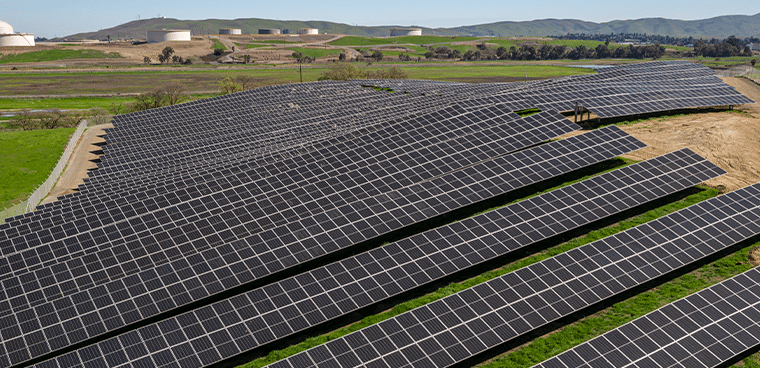
The rapid growth of the solar power industry has provided many opportunities for local governments and universities nationwide – especially in California, where particularly attractive renewable energy state laws are helping to boost savings and operational efficiency.
But as is the case with any state, California’s legal landscape can be challenging for any organization to navigate, leaving potentially beneficial solar programs falling through the cracks.
Such is the case with California’s Renewable Energy Self-Generation Bill Credit Transfer (RES-BCT) program.
Despite its many benefits, RES-BCT lacks widespread recognition. Even if you’re aware of the program, you may not have quite enough background information to make a strong case to stakeholders and leadership about how it can be leveraged when investing in solar.
This RES-BCT guide can help.
Keep reading for a comprehensive overview of what RES-BCT is, who it benefits, how your organization can take advantage of it and a real-world example of how one California wastewater utility has leveraged it to offset various electrical meters throughout its operations.
What Is RES-BCT? An Overview of the Program
Simply put: RES-BCT is a California-based renewable energy initiative that allows local governments and college campuses to generate renewable energy through solar energy and related technologies. The organizations then have the option to transfer leftover energy to California’s public utility energy grid.
All energy transferred back to the grid earns generation credits, which can be transferred to designated accounts within an organization.
In doing so, RES-BCT helps to provide greater incentives to local governments and campuses to invest in solar.
Who Is Eligible for RES-BCT?
If you are considering participating in RES-BCT renewable energy generation for your organization, you’ll first want to make sure that you meet the specific criteria for eligibility.
Under California law, you can participate in RES-BCT if you are a local government or a campus that is defined as follows:
- Local governments: Local public agencies that don’t sell exported electricity to third parties. Eligible local governments include California cities, counties, municipalities, school districts, special districts, or other local public agencies.
- Campuses: Any California community college campus or individual campus in the University of California or California State University systems.
Geographic and Technical Requirements
If your organization meets the criteria as either a local government or a campus, the next step is to see if you meet the technical requirements for eligibility:
- You must be able to generate renewable energy that meets the conditions in the California Renewables Portfolio Standard Program.
- Your energy generation must operate within the boundaries of the eligible local government or campus.
- Each generating account within the geographic area must generate 5 megawatts or less of renewable energy.
- All renewable energy generation must be owned and operated by a legally eligible local government or campus.
- Energy generation must be sized to offset the local government or campus’s energy consumption.
- Your generating account must be a designated retail service account located within the premises of an eligible local government or campus.
- Your generating account must use a Time-of-Use rate schedule.
- Your generating account must offset the energy consumed by property owned or operated by your eligible local government or campus.
- You must have an interconnection agreement with your utility provider.
How Does the RES-BCT Program Work?
While participation in the RES-BCT program can undoubtedly benefit local governments and university campuses, your organization’s stakeholders will want to consider a few key points before making their decision.
Understanding the ins and outs of RES-BCT system requirements, credit systems, and billing considerations can help clarify major questions they may have and improve your chances of success with the program.
Setting Up Solar Energy Systems
To participate in the RES-BCT program, an organization must own or operate property where solar generation systems can be installed. Additionally, the solar project must be within the same county and serviced by the same energy utility provider as the participant.
Once the solar energy system is installed and receives “permission to operate,” the utility will install a meter to measure kilowatt-hours of energy production. (The solar project should not exceed annual energy consumption from all (combined and benefitting) accounts.)
The meters monitor the participant’s energy input and output to determine bill credit earnings.
Generating and Transferring Bill Credits
Once the metered solar project is set up, participants can designate up to 50 benefiting accounts to receive credits from the energy returned to the grid.
The transferring bill credits you accumulate from your generated energy will be taken out of the monthly energy bill from each of your benefitting accounts. If you have multiple benefitting accounts, you will determine beforehand what percentage of your overall generating credits gets applied to each account.
Billing and Financial Considerations
The RES-BCT plan rate is limited and only available to local entities on a first-come, first-served basis. Once a utility’s RES-BCT cap is reached, the program will close and all pending projects that have not yet met the requirements will be ineligible for RES-BCT.
Once you have set up your solar energy project, you can only export excess energy back to the public grid. The RES-BCT program does not allow you to sell the energy to a private third party.
How Can Organizations Benefit From RES-BCT?
The RES-BCT program offers financial, environmental, and operational benefits. Though specific benefits vary depending on your energy use, generation, benefitting accounts and other factors, long-term benefits make up for the costs and resource consumption of your initial investment in solar energy.
Financial Benefits
The most obvious benefit of the RES-BCT program is long-term financial savings.
When your organization returns solar energy to the grid, the resulting RES-BCT credits reduce energy costs from its designated accounts.
Though these savings may vary in amount initially, over time, they can save California local governments or college campuses a significant amount of money in energy costs.
These savings come in addition to the energy costs you have saved by generating renewable energy on your property.
Environmental Impact
Investing in solar also helps you reduce your carbon footprint by lowering carbon emissions associated with energy production.
Not only will you reduce your carbon emissions as a local government or campus by generating renewable energy on your property, but the energy you return to the interconnected grid reduces the overall carbon emissions for the energy generation of the system as a whole.
Operational Efficiency
By letting you allocate energy generation and financial credits to multiple accounts you operate, the RES-BCT tariff program also helps improve operational efficiency.
By offsetting energy in your designated befitting accounts, your organization can better grasp energy management and resource allocation across all of your properties.
Case Studies: How Central San Is Using RES-BCT
The RES-BCT program has already brought substantial benefits to local governments across California. Take Central Contra Costa County, for example.
Central Contra Costa Sanitary District (Central San) is a wastewater utility serving nearly 500,000 residents and over 15,000 businesses in central Contra Costa County.
One of Central San’s key objectives, identified in its Comprehensive Wastewater Management Plan, is to optimize energy production and use while minimizing greenhouse gas emissions.
Central San hired ARC Alternatives to explore avenues for expanding its solar photovoltaic (PV) footprint and identify energy efficiency opportunities at its facilities. This would, in part, help Central San facilitate saving opportunities for its customers.
Working with ARC Alternatives and Central San, REC Solar designed, engineered, procured and constructed a 2.2 MW ground mount solar array on a repurposed portion of a 48-acre buffer property near Central San’s Martinez wastewater treatment plant. Central San and REC Solar worked closely with the existing tenant and the surrounding community to ensure the project had minimal disruption to the land and was not visible to the neighboring residents.
The low-profile, fixed-tilt ground mount array, designed to be optimal in both production and cost, offsets most of the annual grid demand of Central San’s treatment plant and major pumping stations through PG&E’s Renewable Energy Self-Generation Bill Credit Transfer (RES-BCT) program.
As part of the RES-BCT program, the solar array’s energy generation is injected locally onto the PG&E grid, providing offsets to the various electrical meters across Central San’s operation. This allows for the optimization of a local, centralized generation source that can provide benefit to the distributed infrastructure operated by Central San.
Financed as a 25-year Power Purchase Agreement (PPA) through REC Solar, Central San was able to shift the project from a costly capital expense to a predictable monthly payment with no price escalation. As part of the agreement, REC Solar will continue to own, operate and maintain the solar array over the life of the PPA.
The array is estimated to generate nearly $6 million in net electricity bill savings over the next 25 years.
Take Advantage of the RES-BCT Program
If you’re considering solar, now is the time to act.
Even without RES-BCT benefits, your organization can already save significantly on energy expenses by investing in solar energy generation. But the RES-BCT tariff program itself is an excellent — albeit overlooked — way to compound these savings across different properties you operate while increasing your energy savings.
The RES-BCT program is an excellent way for eligible local governments and campuses to reduce monthly energy bills for specific accounts on their property, lower their carbon footprint, and greatly improve their operational efficiency.
If your organization is considering solar, RES-BCT is the great additional considering doing so, RES-BCT may be a great additional incentive.
California’s NEM 3.0 Policy: What Commercial Solar Customers Need to Know
NEM 3.0 in California: Opportunities for Commercial Ventures
In April 2023, the third revision to the California Public Utilities Commission’s net energy metering policy went into effect in SCE, PG&E and SDG&E service territories. And with that revision came sweeping changes to how California businesses, schools, universities and municipalities are compensated when investing in solar and storage.
Here’s a brief look at what those changes mean and how your business can leverage battery energy storage systems to generate more savings on your next solar project.
Understanding NEM 3.0
What is NEM 3.0?
Net energy metering (NEM) policies provide savings for utility customers who generate their own solar energy, allowing them to sell their system’s excess solar electricity back to the grid.
Under California’s previous NEM 2.0 policy, utility customers were compensated at the retail rate for their excess solar production or solar exports. This helped to offset future electricity bills and created a strong case for organizations to invest in onsite solar.
Under the current NEM 3.0 policy, California shifted from a net metering to a net billing structure.
Instead of receiving compensation for surplus solar production at the retail rate, organizations now receive compensation for the excess production at a rate that varies depending on the time and day the solar was exported back to the grid– a move that significantly reduces the value of solar exports by up to 75% of the retail rate.
Impacts of NEM 3.0 on Californian Commercial Ventures
Energy Storage Solutions
California utility customers can generate significant savings by pairing onsite solar with a battery energy storage system.
Instead of selling excess solar back to the utility – at the new much lower variable rate – organizations can now store their surplus solar in a battery energy storage system.
By storing low-cost energy in the in the batteries and unloading that stored energy during peak periods of higher electricity rates, your organization can considerably reduce its energy bills, take advantage of time-of-use rates and enhance its energy independence and reliability.
And with all of California’s investor-owned utilities significantly raising electricity rates within the past year, evaluating solar + storage now under NEM 3.0 can result in generating greater annual savings than if you installed solar alone, allowing you to save even more money over the life of your system.
Make the Most NEM 3.0 Updates in California
Under NEM 3.0, your organization can pair solar and storage solutions with a Power Purchase Agreement (PPA). By doing so, your organization can leverage the following benefits:
- Increased energy savings
Commercial solar energy storage is your organization’s best defense against costly and fluctuating peak energy charges. By storing low-cost energy and delivering it during peak periods of higher electricity rates, your organization saves on overall energy costs and avoids peak usage penalties. - Reduced carbon footprint
A solar + storage system has no direct emissions. It’s energy efficient. It recycles electricity. Pairing solar + storage is a win-win for your sustainability goals, helping you lower your carbon footprint considerably more than just by installing solar alone. - Predictable payments
When financed as a power purchase agreement (PPA), your business can purchase power generated at a fixed rate, shifting your solar + storage project from a costly capital expenditure to a predictable operating expense for the life of your agreement. - Opportunities for grid services participation
By investing in a solar + storage system, your business may be eligible to generate additional revenue through participation in programs such as Demand Side Grid Support (DSGS), Demand Response Auction Mechanism (DRAM) and Emergency Load Reduction Program (ELRP Group B).
Leveraging NEM 3.0 for Increased Business in California
As in most areas of operations, strategic planning is one of the most critical factors to consider regarding net metering in California. Evaluating your current energy needs and creating a plan for strategic growth will ensure that you implement the right technologies for maximum benefit.
Here are the recommended steps for commercial organizations to take when planning for solar investments:
- Step 1: Evaluate current and future energy needs
Conduct an energy audit to determine peak demand times and total consumption. Consider TOU and utility rates when planning future growth and expansions. - Step 2: Choose the right partners
From installers to financial advisers, you need people who understand the ins and outs of NEM 3.0, solar systems and financing options. When you invest in a solar + storage project, you want to make sure the company you choose to work with will be around for the life of your system. - Step 3: Consider financing with a PPA
Power Purchase Agreements (PPA) reduce financial barriers by making solar systems more affordable. Unlike other commercial solar financing options – such as solar leasing, loans and cash – a commercial solar PPA allows you to save on the amount you pay for energy. By only paying for the energy you take from the system, you’re provided with predictable payments, worry-free maintenance and operations services, and longer-term savings over the life of your contract. - Step 4: Implementation
Once your system is in place, you’ll start to see the benefits of your solar investment. After installation, it’s critical to monitor and track energy production and consumption for the best results.
Make the Most NEM 3.0 Updates in California
NEM 3.0 brings significant changes to the solar industry in California but there are still ample opportunities for your business or organization to realize substantial energy savings. Find out how you can leverage commercial solar + storage solutions as an investment opportunity under NEM 3.0.
Let’s chat! To find out if solar + storage is the best fit for your organization, fill out the contact form below to schedule a quick 30-minute consultation with one of our solar experts. To find out if solar + storage is the best fit for your organization.